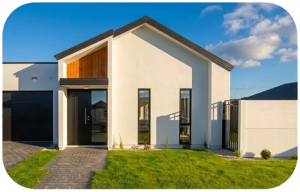
By 2009, Robert was building houses with his own teams – houses that went on to win Master Builders House of the Year awards, including Silver, Gold, and two Gold Reserves.
 Then Christchurch was hit by two major earthquakes. Robert had to rethink what a better building system needed to do.
He had already built two houses using structural insulated panels (SIPs). SIPs are rigid, and in an earthquake, rigid cracks. Once a panel cracks and moisture gets in, you’re not fixing a surface; you’re repairing part of the house’s structure.
So he went looking for a system that would hold up better in a quake, deliver the performance he was after, and cost less to build. That became the system behind Energy Efficient Homes.
By 2010, Robert had turned his attention to energy efficient building. Under the Whitehouse Builders trade name, he developed the skills, systems, and supplier relationships to make energy efficiency part of the design, rather than something ‘added on’.
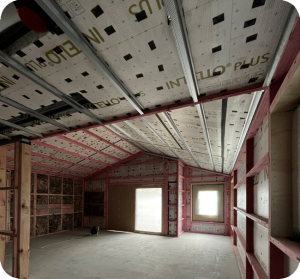 He studied Passive House principles, attended international conferences, and built relationships with people at the forefront of high-performance building, including Lothar Moll of Pro Clima and Wolfgang Feist of Passive House. In 2015, he became a certified Passive House tradesperson.
In 2024, he built a Passive House Premium in Christchurch, the most demanding level of Passive House certification.
But he never lost sight of what he believed about value. Passive House was out of reach for most people, but a warm, healthy, energy efficient home shouldn’t be a luxury item.
That became the mission behind Energy Efficient Homes: to deliver Passive House-style performance at a price Kiwis can actually afford.
 Robert’s approach has never really changed: find something good, make it available, and don’t charge more than you have to.
It’s the same instinct that took him from manufacturing kitchens, to inventing a foundation system, to building Passive House performance into affordable homes.
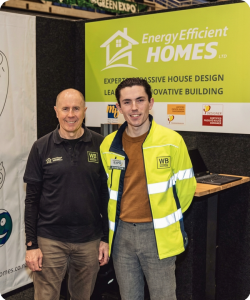
These days, he’s not the only one applying it. His son, Daniel Whitehouse, is our quantity surveyor, watching every dollar on your build.
When Robert looks back over his four decades in business, it was never just about giving his customers value for money. It was also about the people who trusted him to deliver it.