
Energy Efficient Homes
In the ever-evolving world of construction, the quest for better, more Energy Efficient buildings is an ongoing journey.
Among the tools in the arsenal of sustainable construction practices is the blower door test. This test is a critical step in evaluating a building’s overall performance, and its results can be the difference between a run-of-the-mill structure and a cutting-edge, Energy Efficient masterpiece.

A Blower Door test is a comprehensive examination that measures how effectively the building envelope prevents air from leaking in or out. This process is crucial because it impacts a variety of factors, including Energy Efficiency, indoor air quality, and moisture control within the building.
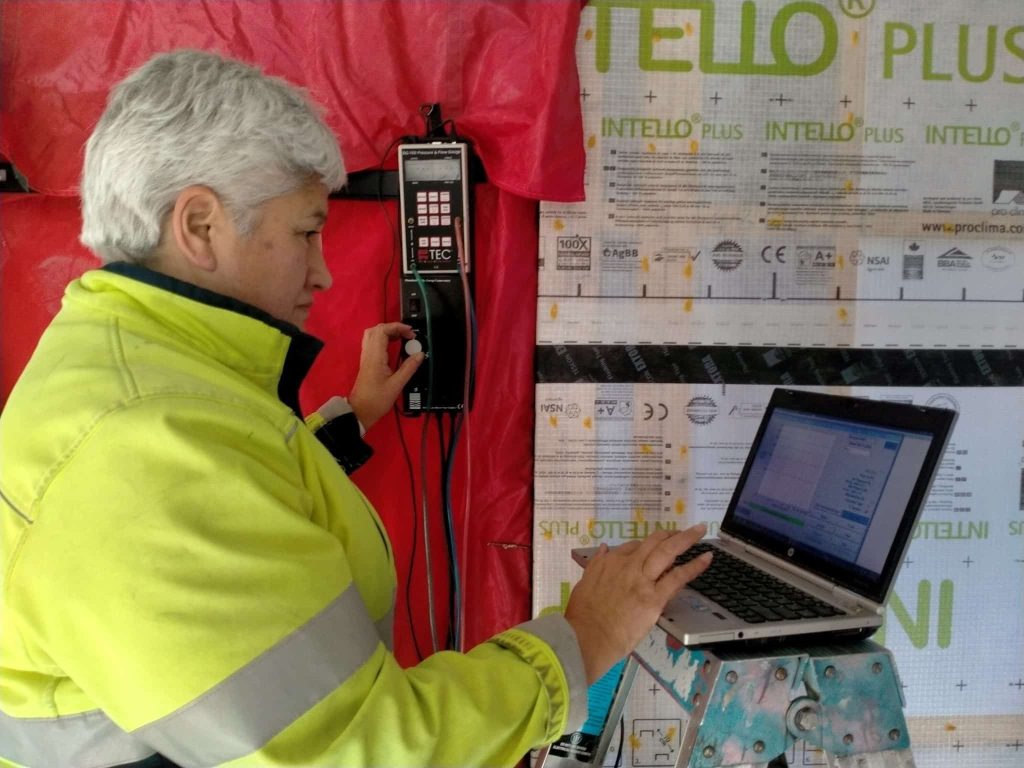
At the heart of this test lies the “blower door.” This device consists of a powerful fan that either extracts air from the building or supplies it. By creating a controlled pressure difference across the building envelope, the blower door measures the airflow, enabling the quantification of air leakage.
Preparing for the Test
Before the air tightness test can be carried out, the building must undergo some preparations. This involves sealing or blocking intentional openings that will later be addressed such as HVAC intake and exhaust grills. The idea is to isolate the building envelope and ensure that the test results are a true reflection of its performance.

The Measurement Process
During the test, the blower door fan is used to either pressurise or depressurise the building. The equipment measures the airflow rate required to maintain a specified pressure difference, often set at 50 Pascals (Pa), across the building envelope. This measurement is recorded in cubic feet per minute (CFM) or cubic meters per hour (m³/hr).
Understanding the Results
The results of the air tightness test provide a clear and quantitative measure of the building’s air leakage. Lower air leakage rates signify a more airtight building, which is closely associated with higher energy efficiency and improved indoor air quality. These results can be crucial for various reasons:

Compliance: Passive Houses must meet specific airtightness targets.
Energy Efficiency: A tighter building envelope requires less energy for heating and cooling, leading to significant cost savings.
Indoor Comfort: Reducing air leakage minimizes drafts and temperature variations, making the indoor environment more comfortable.
Moisture Control: Airtight buildings are less susceptible to moisture-related issues, such as condensation and mold growth.
Verification: The test offers concrete evidence that the building’s design and construction methods have successfully achieved the desired level of airtightness.
In the rapidly changing landscape of sustainable construction, the Air Tightness test is a vital step toward creating buildings that are not just structures but also Energy Efficient, comfortable, and healthy homes.
At Energy Efficient Homes Ltd all our builds, both Passive and Energy Efficient, will undergo a Bower Door test by a certified tester to ensure your home will preform to the very highest of standards
So, when it comes to your next construction project, remember the old adage: “Test it tight, build it right.” Your building—and your wallet—will thank you for it.