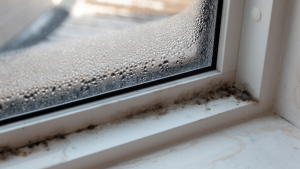

We spend a significant portion of our lives indoors and the quality of the air we breathe within our homes has a profound impact on our overall well-being. Indoor air quality can influence the health and comfort of our family. While it’s easy to assume that the air within our homes is cleaner than the outdoor environment, startling research has shown that this is not always the case.
Indoor Air Pollution
The sources of indoor air pollution are diverse and multifaceted. Cleaning products, paints, solvents, and even furnishings, can all lead to respiratory issues, allergies, and other health concerns when their concentrations become elevated indoors. Mold spores, pet dander, and allergens also contribute to the allergenic load within our homes, often exacerbating respiratory problems in sensitive individuals. Even the particles generated during cooking and fireplaces and gas stoves, can all affect the air we breathe.
So why not just open a window? In an urban environment, where roads are bustling with vehicles and traffic congestion is a norm, an often underestimated source of indoor air pollution is vehicle fumes in our homes coming in through those open windows. While it’s tempting to invite a breath of fresh air indoors by opening windows, we not only allow oxygen-rich air in but also vehicle exhaust fumes and pollutants to enter our living spaces. These pollutants can include nitrogen dioxide (NO2), carbon monoxide (CO), and fine particulate matter (PM2.5), which have been linked to respiratory diseases, cardiovascular issues, and even cognitive impairments.

The Role of Mechanical Heat Recovery Systems (MHRS)

This is where Mechanical Heat Recovery Systems (MHRS) emerge as a transformative solution. Not only do MHRS contribute to improving indoor air quality by providing a controlled and continuous exchange of fresh outdoor air, but they also mitigate the risk of vehicle fumes and outdoor pollutants infiltrating our homes. MHRS operate on the principle of extracting stale indoor air while simultaneously introducing fresh filtered outdoor air.
The ingenious heat exchange mechanism employed by MHRS ensures that the incoming air is preconditioned by the heat captured from the outgoing air, thereby not only enhancing IAQ but also maintaining energy efficiency.
Pictured here you can see the difference in the filters of my MHRS, these filters are being changed after 4 months of use. They can also be vacuumed to extend their use.


The Heat pump filter which has not been changed for 18 months also shows clearly how clean our air is.


Ensuring Safe Sleep: Managing Overnight CO2 Levels with Heat Recovery Systems
A good night’s sleep is essential for our well-being, but what many people might not realize is that the air quality in our bedrooms during sleep hours can significantly impact our health. One of the critical factors to consider is the level of carbon dioxide (CO2) in the air we breathe. While CO2 is a natural component of the air, its concentration indoors can become problematic, especially when proper ventilation is lacking. This is where Mechanical Heat Recovery Systems step in to ensure that our sleep environment remains safe.
During the day, various activities like cooking, cleaning, and the presence of occupants contribute to the production of CO2 in our homes. However, when night falls and activities wind down, CO2 emissions from indoor sources continue, while the outdoor air exchange decreases due to closed windows and doors ventilation is reduced. As we breathe out, we exhale CO2, and if there’s insufficient ventilation to dilute and replace this exhaled air, CO2 levels can rise to potentially harmful levels.
The Dangers of Elevated CO2 Levels
When CO2 levels become elevated indoors, it can lead to a phenomenon known as “carbon dioxide rebreathing.” This occurs when the air we exhale, which contains higher concentrations of CO2, accumulates in the indoor environment, reducing the oxygen content of the air we breathe. Over time, this can lead to discomfort, poor sleep quality, and even health issues such as headaches, dizziness, and impaired cognitive function. In severe cases, prolonged exposure to high CO2 levels can lead to more serious health concerns.

Empowering Healthier Living Through Informed Choices
Our understanding of environmental factors affecting health has deepened and it is essential to approach indoor air quality with a comprehensive perspective. By acknowledging the sources of indoor air pollution we can make informed decisions to safeguard the health of ourselves and our loved ones. Incorporating Mechanical Heat Recovery Systems into our homes isn’t just a technological advancement; it’s a step toward nurturing a healthier, more comfortable living environment.
The air we breathe within our homes is a critical determinant of our overall well-being. Unseen pollutants from various sources, including vehicular emissions, can infiltrate our indoor spaces and compromise our health. However, the adoption of solutions like Mechanical Heat Recovery Systems offers a beacon of hope. By tackling indoor air pollution at its root and preventing the intrusion of outdoor pollutants, MHRS play a pivotal role in shaping the quality of the air we breathe and, consequently, the quality of our lives. It’s time to embrace a holistic approach to indoor air quality—one that encompasses both our personal spaces and the world beyond our windows.