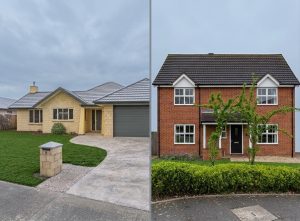
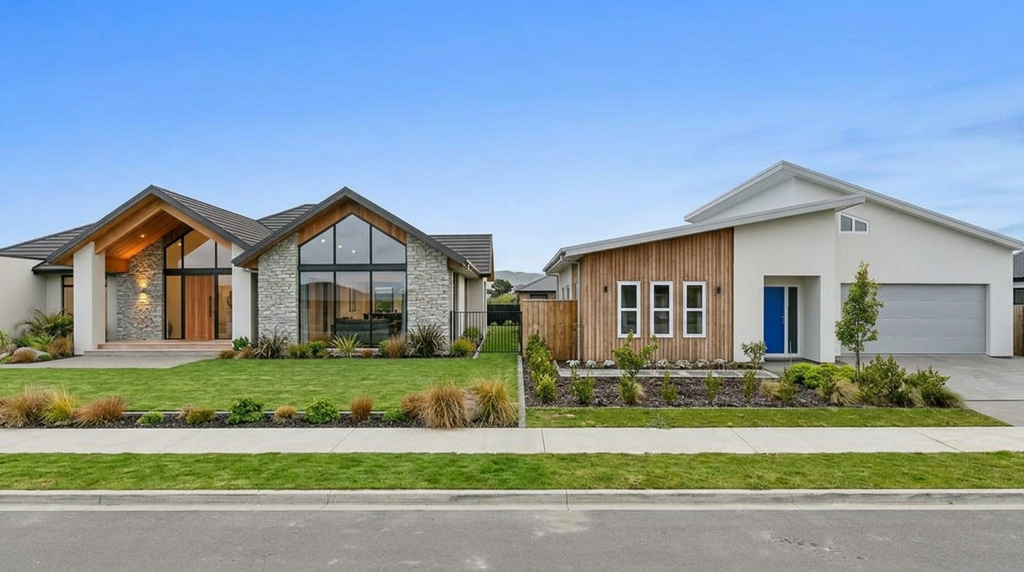
Imagine two new houses being built side by side in Christchurch.
They have similar budgets, similar floor areas, modern kitchens, luxurious bathrooms, and all the mod cons you’d expect from a new home.
But there’s a difference.
One boasts natural stone cladding, an impressive entrance, floor-to-ceiling feature windows, and architectural flourishes.
The other has deceptively simple lines. Its budget was spent on the inside: high-performance windows, insulation, airtightness, and mechanical ventilation.
And on a freezing Canterbury morning or a scorching summer afternoon, the families living in these two houses will experience them very differently.
The first family loves showing friends around their new home. But after their first winter, they’ve learnt which rooms need an extra heater, where condensation collects, and how to manage their winter power bills. In summer, those feature windows make the living room feel like a greenhouse.
The second family also enjoys showing friends around. They’ve almost forgotten what it’s like to wake up in a cold bedroom. They don’t have to think much about their heating bills or whether to leave the windows open for fresh air. The house just gets on with keeping them comfortable – exactly as it was designed.
Similar houses. Comparable budgets. Very different living experiences.
And that gets to the heart of how much an Energy Efficient Home costs.
Where your building budget
disappears
Nobody sets out to build a cold, damp house.
But when you’re designing a new home, there are plenty of ways to spend money that have little to do with keeping it comfortable.
An elaborate roofline. Expensive cladding. High ceilings. Marble benchtops.
After all, you’re building your dream home. But those aesthetic elements can consume a substantial part of the budget.
Then your builder asks what type of insulation you want, what glazing you expect on the windows, and whether you want a heat recovery ventilation system… and energy efficiency seems too expensive for your budget.
But is it triple glazing and a ventilation system that are making the house unaffordable?
Or is it the design priorities that put energy efficiency last on the list?
You can change your kitchen.
You can't easily change your walls.
When you envision your dream home, you pay close attention to the things you’ll see every day: the kitchen benchtops, bathroom fittings, flooring, and paint colours.
Yet the parts of the house that determine how comfortable it will be to live in are often hidden from view, like the insulation inside the walls, the airtightness of the building envelope, or the spots where heat can escape through thermal bridges.
A kitchen benchtop can be replaced. A bathroom can be renovated.
But the way your home is designed is something you’ll be living with for the lifetime of the building.
Sometimes the best upgrade
is something you leave out
Many people have the idea that energy efficiency is expensive.
But you don’t always need to spend more on performance. Sometimes you need to stop spending money on things that hamper performance.
Consider the shape of the building. Houses with lots of corners, junctions, and rooflines are more costly to build and insulate compared to a simple, compact home.
Or consider the windows. Large areas of glass let in the view, but they also let large amounts of heat in and out.
That doesn’t mean your home has to be dark or plain-looking. It just means that your architect or designer should help you understand which design choices are improving the home’s performance and which are hampering it.
But surely better performance
costs more?
Yes. If you take exactly the same house and replace standard components with higher-performing alternatives, you’ll generally increase the price.
Better windows cost more. Additional insulation costs money. Mechanical heat recovery ventilation requires equipment, ducting, and installation. Good airtightness takes planning and careful construction.
A certified Passive House goes further, with specific requirements for energy performance, comfort, airtightness, testing, and independent certification.
But there’s a difference between making an existing design more energy efficient and designing an Energy Efficient Home from the beginning.
In the first, performance is an extra cost added on. In the second, it’s one of the priorities that shapes the design.
The most expensive mistake
might be the one you don't notice
Think back to those two Christchurch houses.
On paper, they’re quite similar. Both are new. Both meet the New Zealand Building Code. Both represent a substantial investment.
But a building consent doesn’t tell you how comfortable a house will feel on a cold winter morning or blistering summer afternoon.
One house might overheat in summer, feel stuffy unless windows are opened, and end up with condensation in the walls.
Meanwhile, the other house has been designed to manage moisture, pipe in fresh air, and maintain more consistent indoor conditions.
Those differences may not be obvious when you’re comparing building quotes or walking through a finished Show Home. You may not discover them until you’ve lived through your first year in your new home.
And by then, changing the insulation, windows, and airtightness could be a daunting undertaking.
That’s why comparing the cost of building two homes isn’t simply about comparing numbers. It’s about understanding what you’re getting for the money.
Find out what happened when we tested a standard new build against an Energy Efficient Home.
So how expensive is
an Energy Efficient Home?
An Energy Efficient Home can cost more than a standard new build, particularly when you’re comparing identical designs with different specifications.
But you don’t need to break the bank to build one.
We’ll help you make the best choices that direct your budget towards the things that make a home incredibly comfortable to live in.
We’ll help you keep your costs down by bringing in a quantity surveyor from the beginning and saving on architect’s fees with our in-house design and build service.
We believe Energy Efficient Homes should be affordable for all Cantabrians – and we do our best to deliver value for money at every step.
Because once the house is built, the impressive entrance, expensive finishes, and complicated roofline aren’t what will keep you warm on a frosty Canterbury morning.
The insulation, windows, airtightness, and ventilation will.
Talk to us about whether an Energy Efficient Home is right for your home budget.