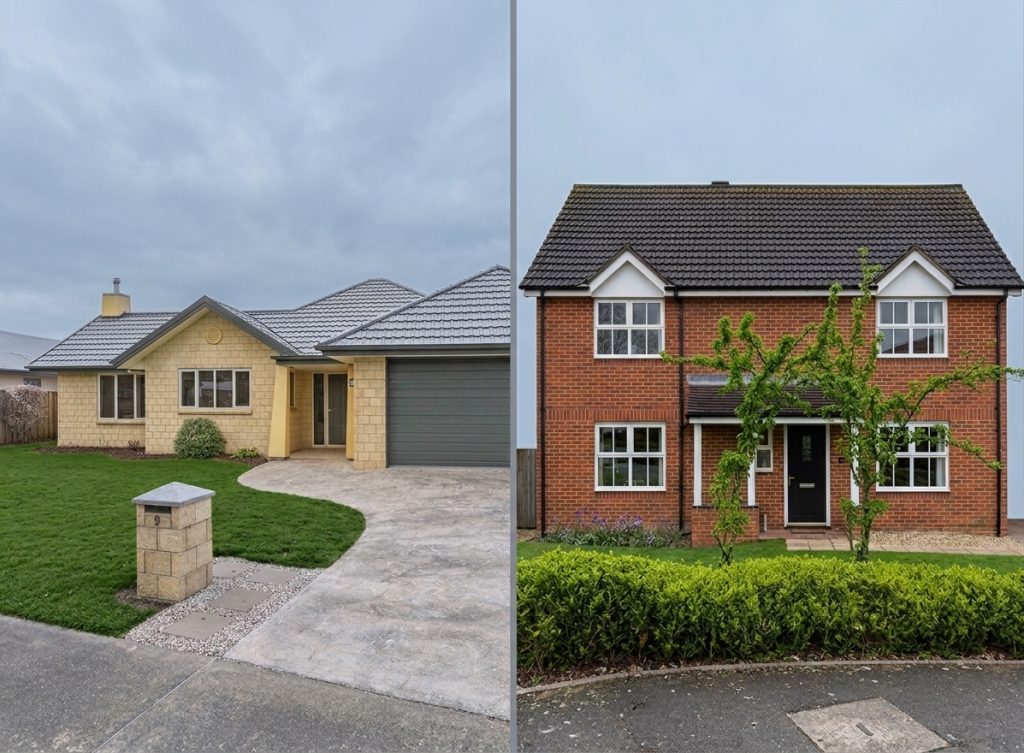
England has regions with a very similar climate to our own here in Canterbury: not too hot in summer, not severely cold in winter, and fairly mild (if a little changeable) year round. So do we build similar homes?
In 2020, BRANZ compared Ashburton, Dunedin, and Invercargill with Southampton and Manchester. Their average annual temperatures sit within about a degree of each other.
With weather that is so similar, it would be sensible to expect both countries to require the same building standards, right?
They weren’t even close. New Zealand allowed nearly 3x the heat loss through walls, and more than 2.5x through windows.
How the numbers stack up now
But that was then, and this is now.
Thanks to the 2023 changes to the H1 Energy Efficiency standards of the Building Code, we’ve improved. But by how much?
Do we finally beat England’s old standards?
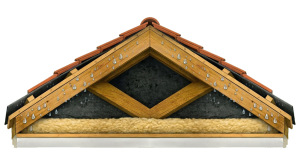
The New Zealand minimum for new walls is R2.0, well below England’s R5.6. Roof insulation doubled to R6.6, though still less than England’s R7.7. Floors are R1.3, a far cry from the England’s R7.7. And windows are now R0.5, still under England’s R0.7.
So let us ask you a question: why do New Zealand homes cost so much? It surely isn’t because of our homes’ performance, as our walls and floors have less than 40% of the insulation England required six years ago. Could it be some other expectation that we have?
England also requires an energy performance certificate when a home is built, sold, or rented. Imagine knowing roughly what a house would cost to heat before you made an offer! It’s an easy-to-read grading scale that ranks every home on its energy efficiency, not to mention what it could save you on monthly heating.
Yet insulation rules almost got weaker
MBIE estimated the 2023 changes cut heating needs in a new four-bedroom home by up to 40%, at an upfront cost of up to 2.8% more.
But in 2024, the Building Minister spoke about an ‘open discussion’ to wind the changes back. Certain entities in the industry lobbied hard against them, claiming that the new insulation standards increased building costs by $40,000 to $50,000 and only made homes overheat.
In fact, it’s just the opposite. Better insulation keeps the house cooler and power bills down, just like a chilly bin keeps your drinks cool in summer. The real cause of overheating is poor design by unaware practitioners.
Thankfully, rather than lowering the insulation minimums, the Government changed how compliance is proven, by backing the science behind building to illustrate that a new build will perform. From 27 November, every consent application must use either the calculation method or modelling method. We’ll share more on that in an upcoming podcast.
You should expect more from your home
There’s an underlying reason New Zealand homes are allowed to be so much colder, damp, and unhealthy than our English counterparts:
It is because our expectations for what a home should be are not the same.
It’s only when you have experienced a consistently warm, dry, and easy-to-heat home that you can really feel the difference and start expecting more. This isn’t magic; it is just building science.
If you’re building in Canterbury, think about building better. We’d be happy to sit down with you and talk through these upcoming Building Code changes and what they mean for your build. There’s no obligation, and you’ll come away understanding the questions you need to ask. Book a time to meet with us here.