Roof condensation can leave your insulation damp, and the damage can go far beyond your power bills. Find out why it happens and how better design can stop it.
I had new roof insulation installed last summer, thanks to the Warmer Kiwi Homes scheme. My existing insulation looked ancient: I’d poked my head into the loft and was horrified at how it had deteriorated.
Much to my surprise, when I checked my records, I discovered I’d put in new insulation just four years earlier. Why had it flattened so much?
The answer came during a visit to the Show Home. As I examined the mockup of a warm roof system, Robert explained that many New Zealand houses have an invisible problem. The space inside the roof gets wet. That dampness not only encourages the growth of mould and dust mites, but it also affects the insulation, causing it to collapse and stop performing.
Uh oh. How could I keep my new insulation from suffering the same fate?
Your roof can sweat, too
We’ve talked before about how moisture from everyday activities can move into your walls, but you may not have realized the same problem can occur in your roof.
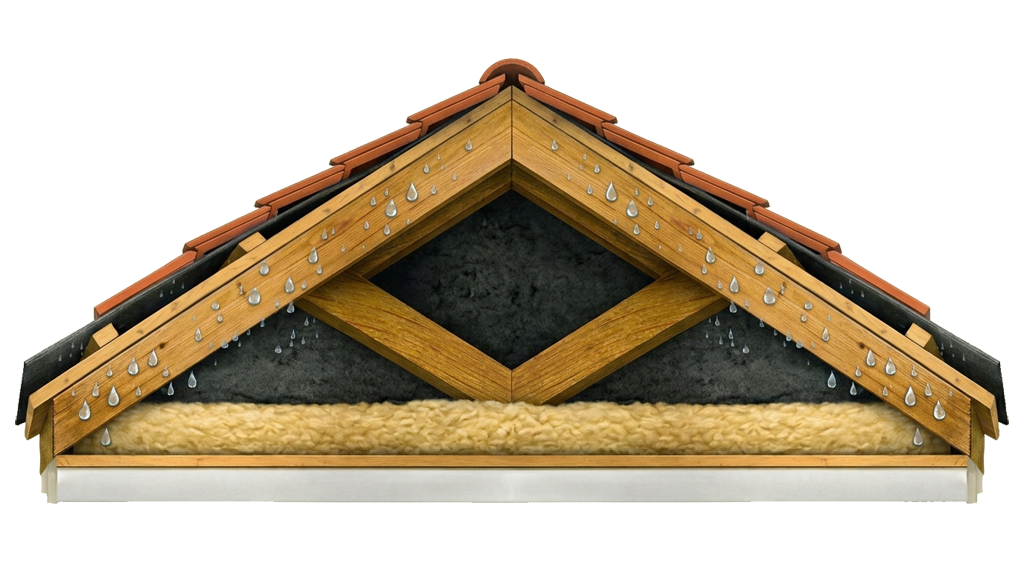
Most New Zealand homes have what’s called a cold roof. The insulation sits above the ceiling, while the roof interior remains outside the home’s insulated envelope.
You can think of insulation like a puffer jacket for your house. It keeps warmth in, which is the point. But it also means less heat escapes upwards, so the roof space gets colder than it used to be. The more insulation you add, the colder it gets.
When warm, damp air from the interior of the house reaches those cold surfaces (the roofing, the underlay, the timber), it condenses back into water. Do that all winter and you get wet insulation – and eventually mould.
It’s like your house is ‘sweating’. When you’re cold, you put on extra layers to keep warm. But if those layers become damp, they don’t keep you comfortable in the same way. Insulation works best when it stays dry, too.
Highway for moisture
In many homes, the problem isn’t simply that the air inside has moisture. It’s that the moisture can escape upwards through gaps in the ceiling.
Downlights are one potential route. Years ago, I replaced my lights with downlights because I’d been told LED lighting was more efficient. What I didn’t realise was that cutting more holes in the ceiling was creating pathways for warm, damp air to escape into the roof space.
The location of your house can matter, too. A home built in a shady spot doesn’t get the sun that would otherwise dry out the roof. Roof design, the type of roofing, the amount of ventilation, and the way the ceiling is sealed all affect the risk.
What about brand-new houses? Do they solve the problem?
The recent H1 building standards have actually made the problem worse. Because the ceiling is now better insulated, the home is warmer and roof cooler, which intensifies the problem.
Can anything be done to help?
Start by managing moisture at its source.
– Use extractor fans that vent outside when showering and cooking.
– Avoid drying clothes indoors where possible.
– Open windows regularly. Even 10 minutes a day can help.
– Keep your home adequately heated.
– Make sure openings into the ceiling and downlights are suitable for their location and properly sealed where required.
– If you suspect persistent condensation in your roof, have the roof space inspected.
These steps can help reduce the risk, but the best solution is to start with the right systems and design.
How we design differently
At Energy Efficient Homes, we look at the whole building, including how moisture moves through it.
A properly designed and installed vapour control layer, along with a ventilation system, manages indoor humidity. That means you can cook, shower, dry clothes, and get on with everyday life without any fear that moisture is destroying the cosy and costly insulation blanket under your roof.
Some roof designs are more vulnerable and need additional protection. Above Sheathing Ventilation (ASV), for example, creates an airflow pathway beneath the roof cladding to help moisture dry out and drain away. But the first priority is to manage moisture at its source, before it can enter the roof. That means getting the building design, vapour control, and ventilation right from the start.
You can see how we build differently during a tour of our Show Home. We’ll show you how the different layers in the walls and roof work together and explain why the details matter.
Because a warm, dry home isn’t just about putting more insulation in. It’s about managing moisture – and keeping it out.