A change to the H1 energy efficiency rules takes effect this November, making thermal modelling one of just two ways to demonstrate compliance. But its real value goes beyond ticking a box. It lets designers test how your home is likely to perform before building begins.
A big change is happening this November.
And if you’re building a new home, it will most certainly affect you.
When designing a new home, you must show it meets the Building Code’s H1 energy efficiency requirements.
Until recently, you could do this via three different methods. But as of 27 November 2026, that list drops down to just two.
So why the change? Does it matter which method your designer uses?
Absolutely! If you don’t understand the benefits and drawbacks, you could end up with a home that falls well short of what you expected, even though it seems to have all the boxes ticked.
Not all methods are equal
The reason the schedule method is being retired is simple: it can be incredibly inaccurate. It uses standard assumptions about a building to demonstrate compliance, regardless of the actual design. This can allow key requirements to be underspecified, resulting in homes that are cold in winter and overheat in summer. That’s not healthy, comfortable living, and it’s certainly not what you should expect from your home.
The calculation method also uses set assumptions, but allows more flexibility. Designers can demonstrate compliance in a more complete way, but this is still very limited. Too often, the focus is simply on meeting the minimum requirements at the lowest possible cost, rather than looking for opportunities to improve performance and deliver better value for the homeowner.
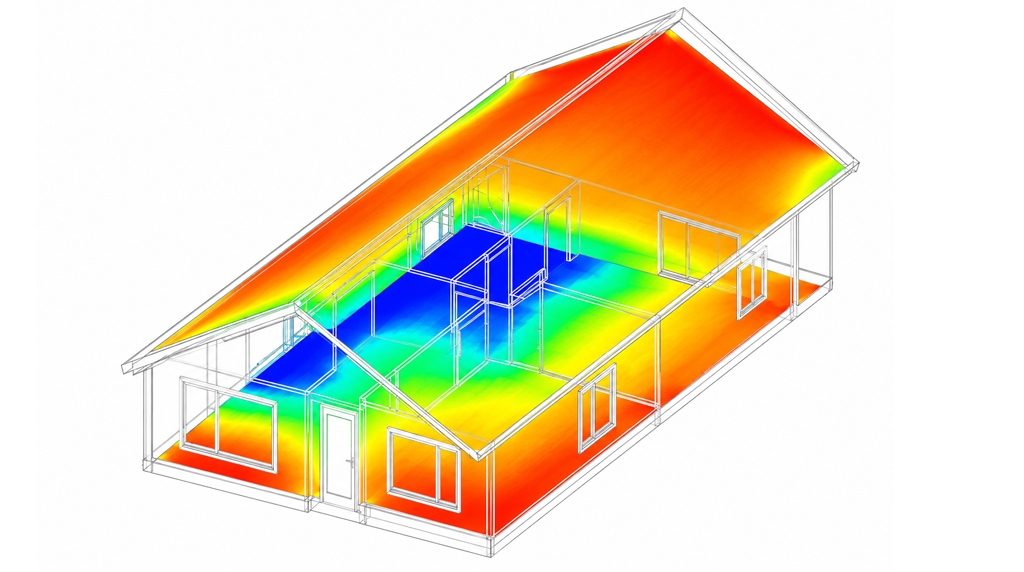
The modelling method takes a different approach. It uses a sophisticated computer model of your home to predict how it will perform in its location, taking local weather into account and all building elements.
The designer can then change any and all parts of the design, run the model again, and see what difference those changes make.
It’s not only more accurate, but it functions like a test run for your home before anyone picks up a hammer.
Why thermal modelling should be on your wish list
Once your house is built, you’re stuck with it. If it overheats from poor window placement or leaves you freezing in winter, you have no recourse.
Thermal modelling eliminates the guesswork.
It can help a designer work out how much heating and cooling your home will need, as well as identify potential problems with moisture, condensation, and overheating.
More importantly, it allows you to explore different options before construction begins.
Would thicker insulation make a meaningful difference? Would reducing the amount of glass help keep temperatures more stable? Could turning the house slightly give you more useful sunlight?
The answers might change how you decide to build.
Thermal modelling in Christchurch
We spoke to Julie Villard, an architect and Eco Design Advisor at Christchurch City Council. Eco design advisors provide free, independent advice on home performance and energy efficiency here in Canterbury.
Julie shares the lessons she’s learned over 15 years as an architect, both in New Zealand and internationally. She and her partner built an eco home in Lyttleton, and thermal modelling helped her modify her design.
She discusses our love affair with windows and how they can contribute to overheating. At peak sunshine, each square metre of glass can let in around 1kW of heat – the equivalent of having a 1kW heater running. With 20 square metres of glazing, that’s potentially 20kW of unwanted heat, often arriving just when your home is already warm enough!
→ Watch the full episode for more design decisions that can make or break your home’s energy efficiency.